 Call: (845) 217-7316


- Hudson Valley Local
In the Hudson Valley 20+ years, serving Kingston and Ulster, Dutchess, Greene and Columbia counties.
- Licensed & Insured
Owner-operated, with our own excavator. Call (845) 217-7316 for a free estimate.
 Hudson Valley Local
 Licensed & Insured
Excavation & Site Work in Kingston, NY
Every house, addition, garage and outbuilding starts in the ground. We dig for foundations and footings, cut trenches, grade the lot and set drainage. We also build up the groundwork for driveways and backfill once the foundation walls are in. The excavator is ours, so the dig starts when your job is ready, not when a rental machine is free.
Excavation is also where our own work began. David started in excavation at 18, before carpentry and residential construction. So every dig is planned with the foundation and the frame that come after it in mind.
What Construction Site Work Involves
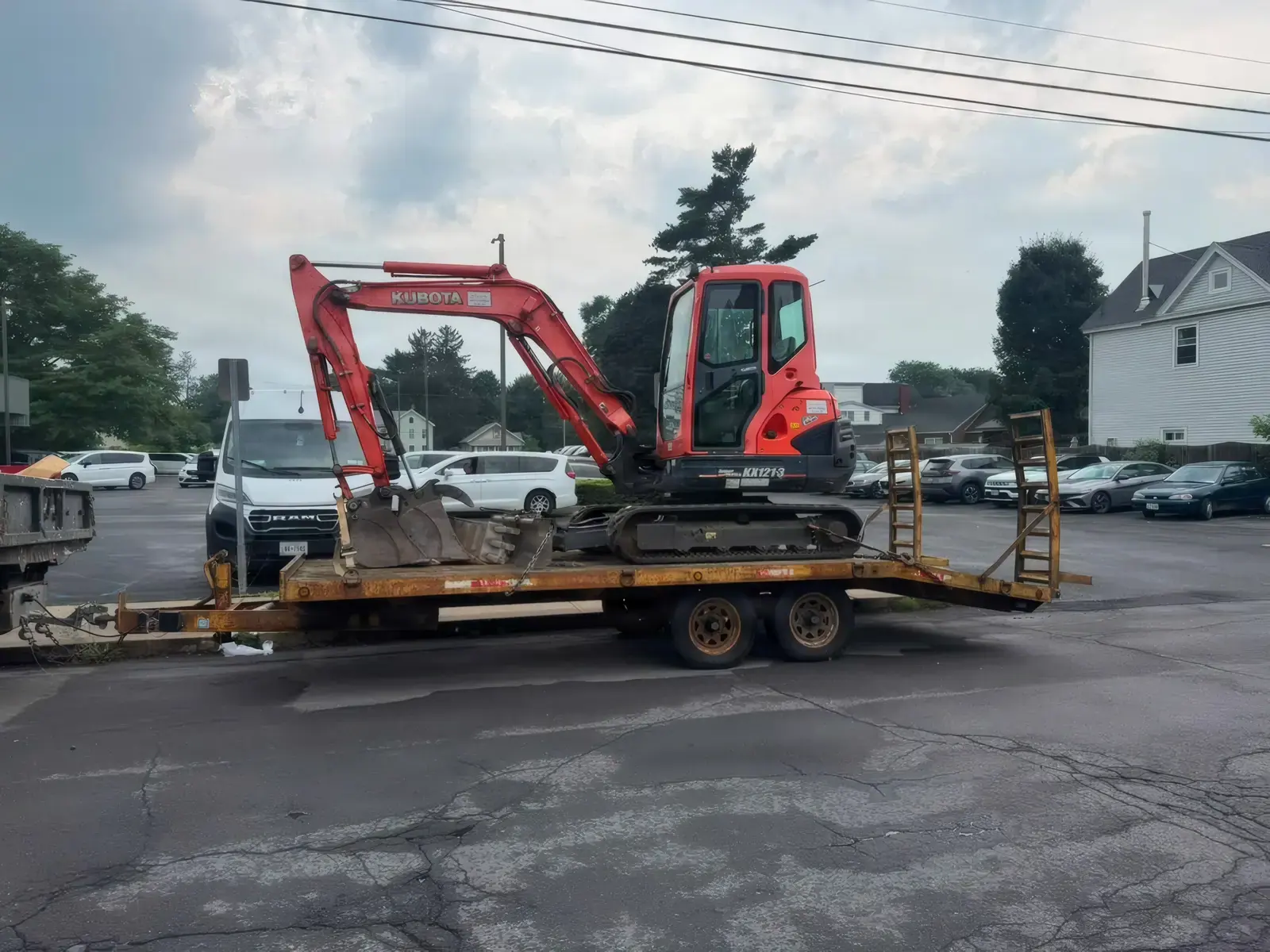
Site work is everything done to the ground before a building goes up, and the work around it once the foundation is in. On a home or an addition it usually covers six jobs.
- Footings and foundations: digging deep enough that the footings sit below the frost line, out of reach of the freeze-thaw of our cold, snowy winters.
- Trenches: for footing drains and the other runs your job calls for.
- Grading: shaping the lot so the ground falls away from the building.
- Drainage: giving water from the roof, the slope and the uphill side of the lot somewhere to go.
- Driveway groundwork: topsoil off and a firm base built up before any surface goes on.
- Backfill: filling and compacting around the foundation walls when they are ready for it.
Site Prep: Getting the Lot Ready to Build
Before a footing is dug, the site has to be opened up and leveled. On a wooded or overgrown lot that starts with land clearing: trees, brush and debris out of the way of the house, the drive and the work area. A root ball left under a slab or a driveway rots and settles later, so stump removal is part of the prep.
Then the ground itself gets worked, in this order.
- Topsoil stripped and stockpiled on the lot, to spread again when the building is up.
- The pad cut and graded level where the house or addition will stand.
- Drainage set so water runs away from where the house goes, not toward it.
Our recent jobs have been exactly this kind of work: lot clearing and grading with our own excavator, stumps removed, the site prepped, and then construction on the same ground.
Dig Safely New York: Lines Marked Before Any Digging
On every lot, the underground lines are marked before the ground is broken, as New York requires. The number to call is 811, for Dig Safely New York. The state's rule, 16 NYCRR Part 753, sets the timing: “Such notice shall be served at least two but not more than ten working days, not including the date of the call, before the commencement date of the excavation or demolition.”
So the start date is planned around that window, and once the lines on your lot are marked, they shape how the dig is laid out.
What Changes Once the Ground Is Open
You can't see what is under a lot until it is dug. The USDA Natural Resources Conservation Service soil survey for Ulster County rates 70.6% of the county's acres “very limited” for shallow excavations. For a house with a basement, large stones are a named limit on 12.8% of those limited acres.
Those are NRCS's county-wide numbers, not a reading of your lot, but they match what a dig in the Hudson Valley can turn up.
- Ledge rock close to the surface, which can change where a footing goes or how the foundation is set.
- Large stones in the subsoil that have to come out before the footings go in.
- Wet ground on low spots and sloped lots, which shapes the drainage plan.
- Old fill on a lot that was worked before, which may not carry a footing.
When the ground holds a surprise, you hear about it from us as soon as we see it, and we go over the options together before the work goes on. Beside the older homes of the river towns, an addition's dig also has an existing foundation to work around.
How Much Does Excavation Cost?
There is no honest number before we see the site. The cost of excavation and site work depends on the size and scope of the project and on the site and its access: a steep drive, a tight lot, trees in the way. The materials count too, such as fill or stone for a base, and so does what is found once the ground is open.
The written proposal you get after we have seen the lot, at no charge, lists each part of the dig with its price, along with a realistic timeline, and nothing is dug before you have it. Call (845) 217-7316 for a free estimate, or send your project through the contact form.
From the Dig to the House
Site work is the first stage of a build, not a separate job. Once the hole is dug and the footings are ready, the foundation and framing go in, and we keep going from there to a finished home through new home construction. One builder from the first bucket of dirt to the last piece of trim means fewer handoffs, and you get updates at every stage.
We do excavation and site work across the region, on both sides of the river, from Catskill to Red Hook, on rocky, wooded and sloped lots alike.
Ready to Break Ground?
Call (845) 217-7316 for a free estimate.
Questions We Hear a Lot

-
Yes. We own our excavator, so grading, drainage and groundwork can start on our schedule instead of waiting on an outside crew or a rental company.
-
Walk the lot with us and share what you know about it: wet spots, old buried pipes or debris, the trees you want to keep and where the septic or well is, if there is one. The rest of the plan, from access for the machine to where the topsoil is piled, is worked out at the site visit.
-
That comes down to how big your project is and what turns up once digging starts. A realistic timeline is set out in your written proposal, so you know the plan before the machine arrives.
-
Yes. We dig for additions, garages and outbuildings as well as new homes. Next to an older house, how close the bucket can go to the old foundation is one of the things we look at with you on the site visit.
-
Yes. Call (845) 217-7316 or use the contact form, and we set up a time to walk the site with you and talk through what's possible before putting anything in writing.
-
-
- Free Estimates Call or email usLicensed & insured
-


